Every job below is one we do ourselves across Bronx.
We frame new decks with footings dug below the frost line, usually around 42 inches in this area, so the structure doesn't heave when the ground freezes. Joists get hung with galvanized or stainless hangers depending on the lumber, and the ledger board is flashed before a single deck board goes down. Most standard decks take one to two weeks depending on size and stairs.
Soft spots in the decking usually mean rot underneath, not just a bad board on top. We pull up boards to check the joists, replace anything spongy, and re-flash the ledger if that's where water's been getting in. A wobbly railing post is often just a loose lag bolt, sometimes it's a rotted post base, and we check both before touching the railing.
Pressure-treated pine needs to dry out for a season before it'll take stain properly, so we don't recommend sealing a brand new deck right away. We power wash first, let it dry, then apply a penetrating stain rather than a film-forming one that peels. Plan on redoing this every two to three years depending on sun exposure.
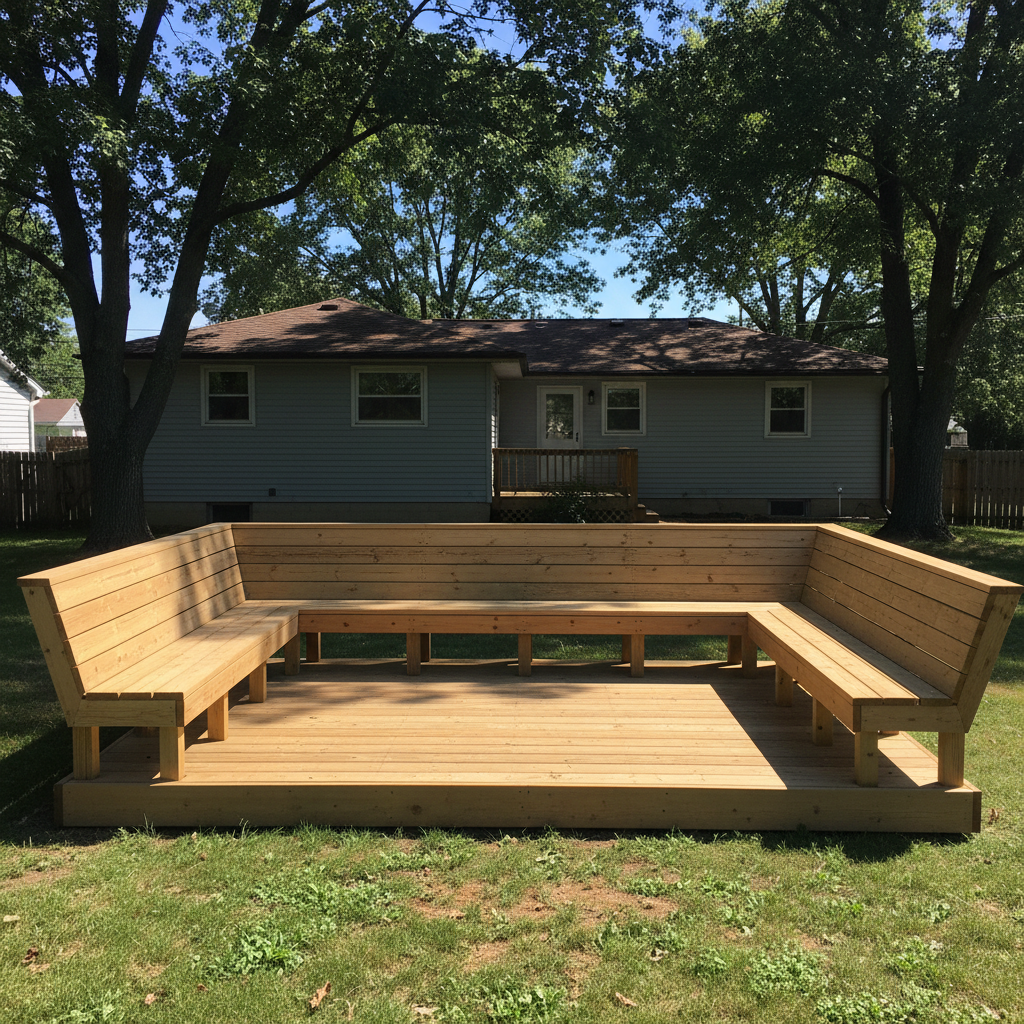
If you want a multi-level deck, built-in benches, or a layout that works around an existing tree, we draw it up before we order lumber. We'll show you board spacing, railing style, and stair placement so there's no guessing on site. This adds time up front but saves change orders once framing starts.
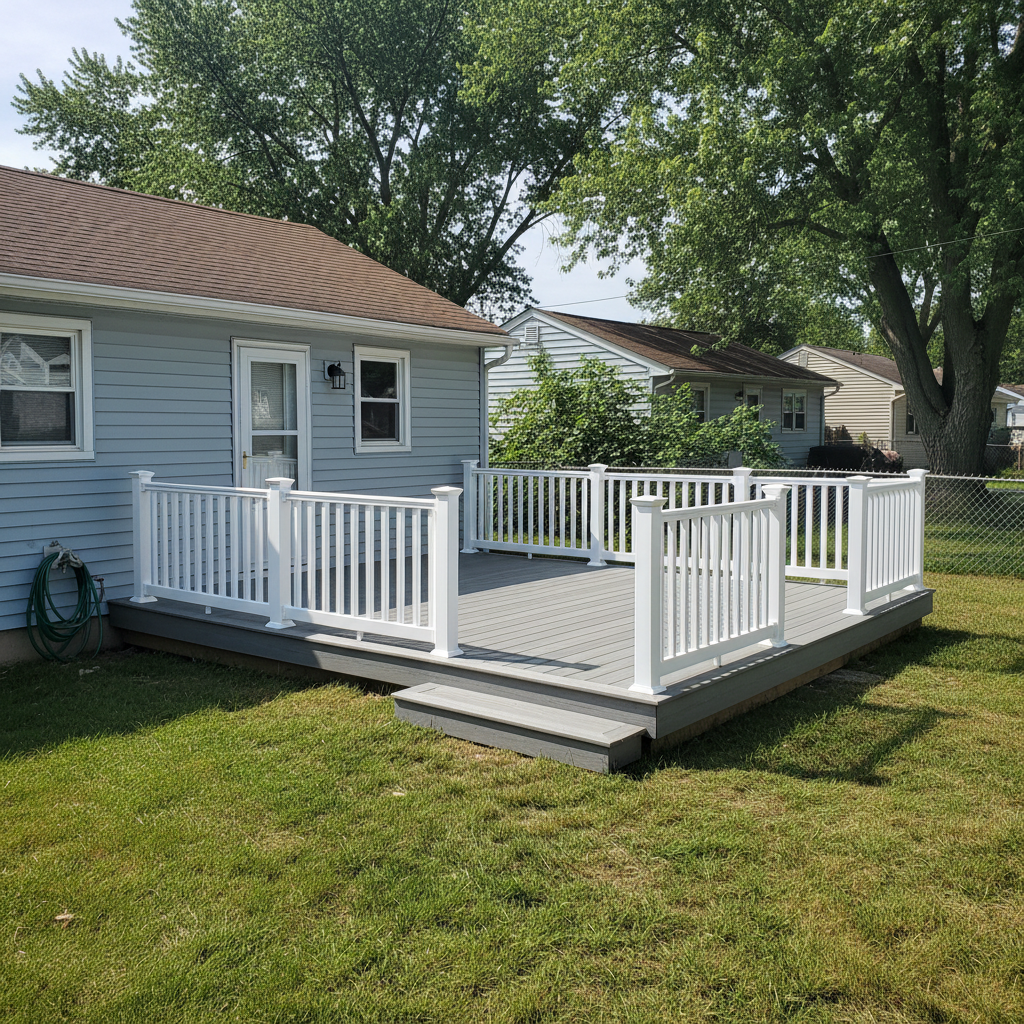
Composite boards like Trex or TimberTech cost more per square foot than pressure-treated pine but skip the staining cycle entirely. We use hidden fastener clips on most composite installs so there's no screw heads showing on the surface. The substructure underneath is still usually pressure-treated lumber, composite is a surface material, not a framing one.
We tear out old decking, railings, and joists, and haul everything off the property. If the footings are sound and set at the right depth, we can sometimes reuse them for the new deck instead of breaking out concrete.
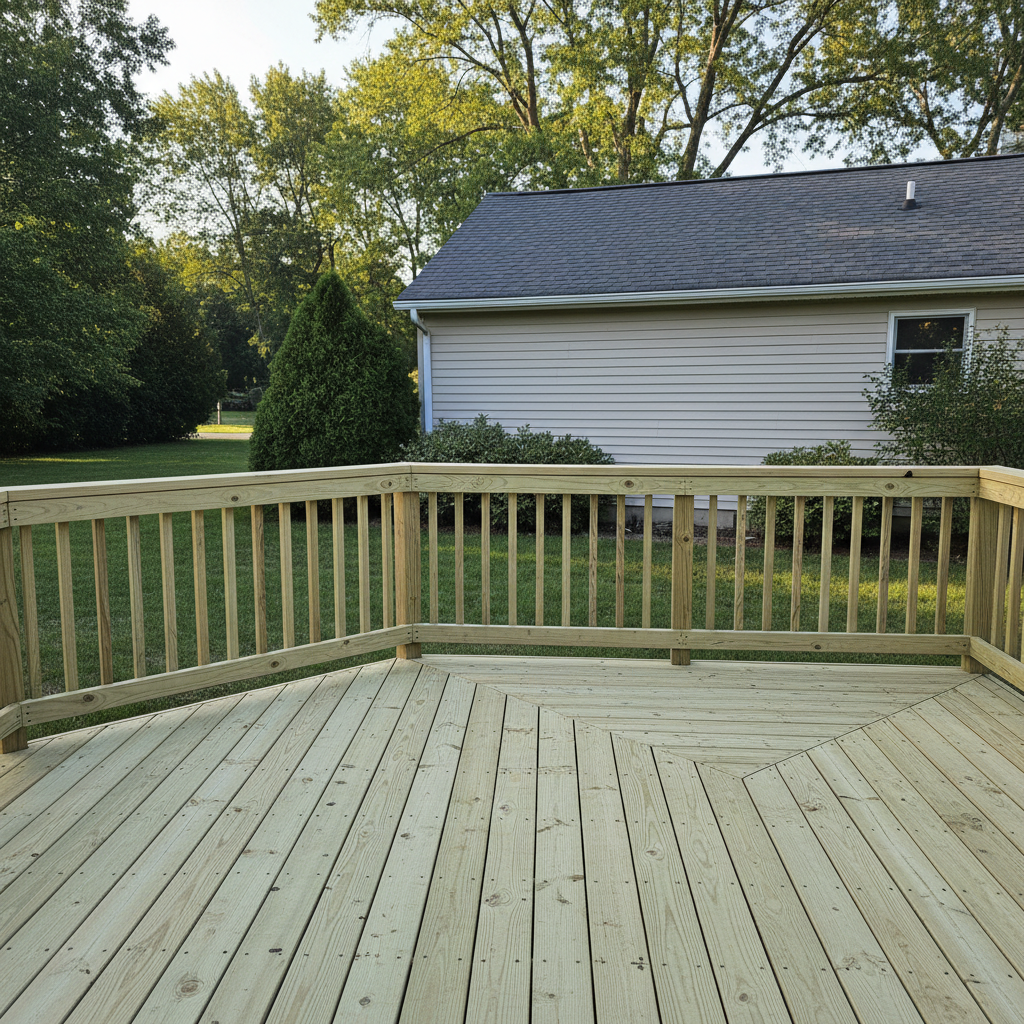
Baluster spacing has to keep a 4-inch sphere from passing through, that's code, not a style choice. We rebuild loose railings by checking the post connection first since that's almost always where the real problem is. Cable rail and metal baluster systems are an option if you don't want the picket look.
If the frame and footings are still solid, we can strip off the old decking and railings and rebuild just the surface. This costs less than a full rebuild and makes sense for a deck under about fifteen years old. We'll tell you honestly if the substructure's too far gone for this to be worth it.
Some homes want a covered porch section attached to an open deck, which means tying a roof structure into the house framing correctly. We coordinate the roof flashing with the deck ledger so water has one place to go, not two.
A pergola built into the deck frame needs its own posts and footings, it can't just sit on top of the decking. We size the posts for wind load, not just looks, since an unanchored structure is the first thing to go in a storm.
Four steps, and no surprises in any of them.
You tell us what you want doing, we look at what is actually there, and we ask the awkward questions early.
In writing, itemised, free. If something might add cost later we flag it now rather than at the end.
Same crew throughout. We cover your floors, keep the dust down and tidy up before we leave each day.
You point out anything you are not happy with and we fix it before the invoice, not after.
Deck work is scheduled throughout the Bronx and the surrounding Westchester and Fairfield County towns.
Questions that come up once a deck project is actually underway.
Describe the problem and we will tell you what it probably is. No obligation.